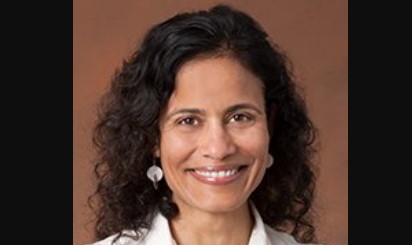
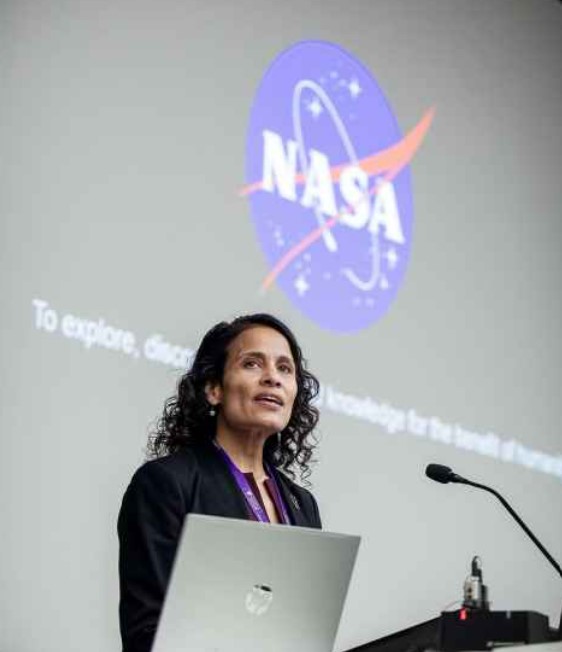
Vandi Verma’s journey is nothing short of extraordinary. Born in India and now working as a Chief Engineer at NASA’s Jet Propulsion Laboratory (JPL), she is among the very few people in the world qualified to drive a vehicle on another planet. Her work has been central to missions like Curiosity, Opportunity, Spirit, and Perseverance, making her a household name in the world of science and technology.
Her story is not just about science; it is about breaking barriers. Growing up in India, she was fascinated by machines and flying, thanks to her father’s career in the Air Force. Today, she stands as a role model for young girls who dream of careers in science, showing that with hard work and courage, even the sky is not the limit.
Vandi Verma Age, Husband, Family, Biography, Career
| Attribute | Details |
|---|---|
| Full Name | Vandana “Vandi” Verma |
| Other Names | Vandi Verma Tompkins |
| Date of Birth | 1973 |
| Age (2026) | 53 years |
| Place of Birth | Jamnagar, Gujarat, India |
| Nationality | Indian-American |
| Parents | Father – Indian Air Force Pilot |
| Education (School) | Kendriya Vidyalaya No. 2, Halwara, Punjab |
| Higher Education | B.E. in Electrical Engineering – Punjab Engineering College, Chandigarh |
| M.S. & Ph.D. in Robotics – Carnegie Mellon University, USA | |
| Doctoral Thesis | Tractable Particle Filters for Robot Fault Diagnosis (2005) |
| Profession | Space Roboticist, Chief Engineer at NASA’s Jet Propulsion Laboratory |
| Fields | Robotics, Artificial Intelligence, Autonomous Robotic Systems |
| Institutions | NASA Ames Research Center, NASA Jet Propulsion Laboratory |
| Known For | Driving Mars Rovers (Spirit, Opportunity, Curiosity, Perseverance) |
| Co-developer of PLEXIL programming language | |
| Major Achievement | Led first-ever AI-planned rover drives on Mars (Dec 2025) |
| Awards | NASA Earth Science Team Award (2008) |
| NASA Honors Awards (2010–2017) | |
| NASA Software of the Year Award (2014) | |
| Documentaries | NOVA ScienceNOW (2011), The Other Side of Mars (2018), Good Night Oppy (2022) |
| Marital Status | Married to Stephen Tompkins (NASA Engineer) |
| Children | Son – Arjun, Daughter – Anya |
| Net Worth (2026) | Estimated between $1–2 million USD |
| @spaceroboticist | |
| @vandi-verma-286678/ | |
| Wikipedia | @Vandi_Verma |
Early Life and Childhood Roots
Vandi was born in 1973 in Jamnagar, Gujarat, and spent much of her childhood in Halwara, Punjab, where her father was posted as a pilot in the Indian Air Force. Her early years were marked by frequent relocations, which gave her exposure to different cultures and schools. This constant change helped her develop adaptability and curiosity.
Her interest in machines began at a young age. She often watched aircraft take off and land, which sparked her imagination. Unlike many children who dream of becoming pilots, Vandi was more interested in understanding how machines worked. This curiosity later shaped her career in robotics and artificial intelligence.
Education and Academic Excellence
Vandi studied at Kendriya Vidyalaya No. 2, Halwara, where she excelled in science and mathematics. Later, she pursued Electrical Engineering at Punjab Engineering College, Chandigarh, one of India’s top institutions.
Her brilliance earned her a scholarship to the United States, where she completed her Master’s and PhD in Robotics from Carnegie Mellon University. Her doctoral thesis, Tractable Particle Filters for Robot Fault Diagnosis (2005), focused on advanced robotics and fault detection systems. This research became the foundation of her later work at NASA, where reliability and precision are critical for space missions.
Personal Life and Family
Behind her professional success, Vandi Verma also has a fulfilling personal life. She is married to Stephen Tompkins, who is also an engineer at NASA. Together, they share a passion for science and exploration. The couple has two children – a son named Arjun and a daughter named Anya.
Her family has been her biggest support system. Balancing motherhood with a demanding career in robotics is never easy, but Vandi has managed it with grace. She often speaks about how her children inspire her to keep pushing boundaries, reminding her that exploration is not just about science but also about leaving a better world for the next generation.
See Also:- CJ Roy
Career Beginnings: From India to NASA
After completing her PhD, Vandi worked at NASA Ames Research Center, where she co-created the PLEXIL programming language in 2006. This language is still used in space missions to control robotic systems.
In 2007, she joined NASA’s Jet Propulsion Laboratory (JPL), where she quickly became one of the few engineers trained to drive Mars rovers. Her ability to combine robotics, artificial intelligence, and human intuition made her an invaluable part of NASA’s planetary exploration team.
Driving on Mars: The Rover Missions
Vandi is best known for her role as a Mars rover driver. She has operated Spirit, Opportunity, Curiosity, and Perseverance, guiding them across the rocky terrain of Mars. Each drive requires careful planning, as even a small mistake can damage the rover.
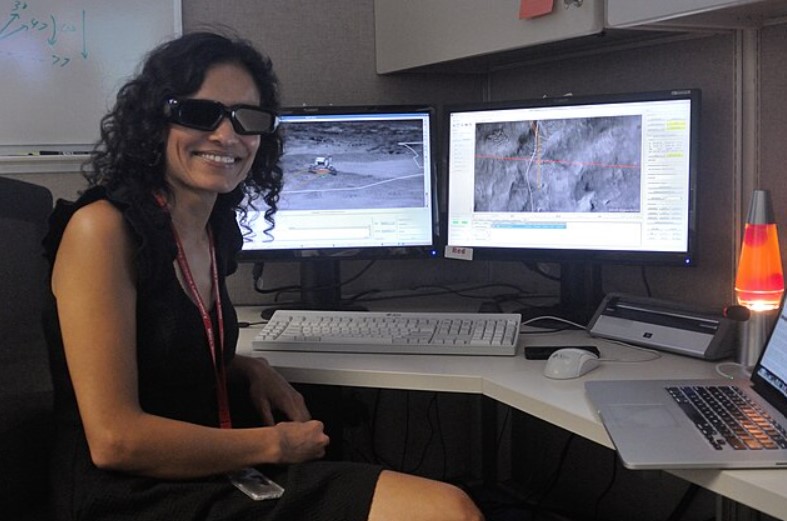
Her most recent achievement came in December 2025, when NASA’s Perseverance rover successfully completed the first-ever AI-planned drives on Mars. This was a historic moment, as the rover navigated routes designed by artificial intelligence rather than human drivers. Vandi was one of the key figures behind this milestone, marking a new era in autonomous planetary exploration.
Awards and Recognitions
Vandi Verma’s career has been decorated with several awards that highlight her contribution to space robotics and planetary exploration. In 2008, she received the NASA Earth Science Team Award, recognizing her work in developing robotic systems that support Earth and planetary science missions.
Between 2010 and 2017, she earned multiple NASA Honors Awards, which are given to individuals who make outstanding contributions to the agency’s missions. One of her most notable achievements came in 2014, when she was part of the team that won the NASA Software of the Year Award. This award was for her work on autonomous systems that allow rovers to recover from unexpected problems and continue their mission safely.
Documentaries and Media Presence
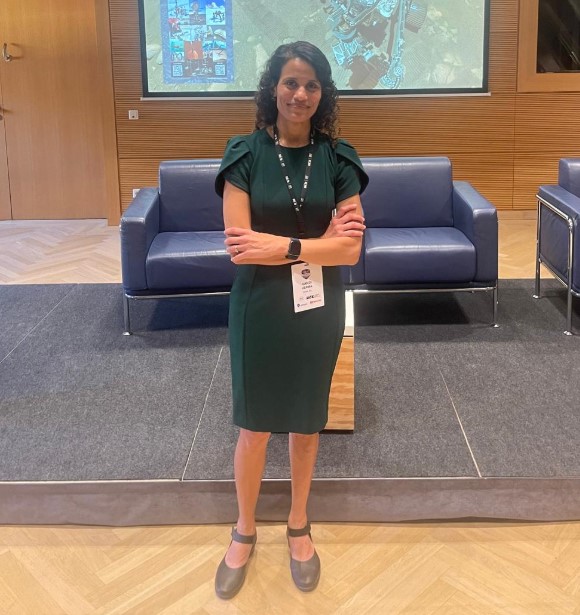
Vandi has also appeared in several documentaries and media programs, which helped bring her work closer to the public. In 2011, she was featured in NOVA ScienceNOW, where she explained the challenges of driving a rover millions of kilometers away on Mars.
Her role was highlighted in The Other Side of Mars (2018), a documentary that explored how scientists interpret images sent back from the red planet. More recently, she appeared in Good Night Oppy (2022), a film that told the emotional story of the Opportunity rover and the people who operated it.
Interesting Facts About Vandi Verma
- The first vehicle she ever drove was a tractor on her grandfather’s farm in India.
- She once won a school embroidery contest, showing her creative side beyond science.
- In 1998, she earned a private pilot’s license, fulfilling her childhood fascination with flying.
- She loves reading and writing, proving that her interests go beyond machines and technology.
- She is a strong advocate for women in STEM, often speaking about the importance of diversity in science.
Read Also:- Shubham Lonkar