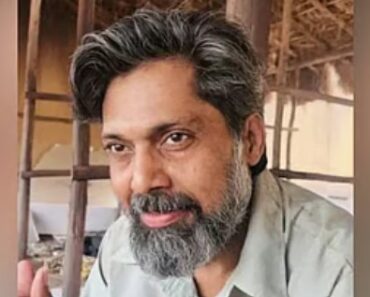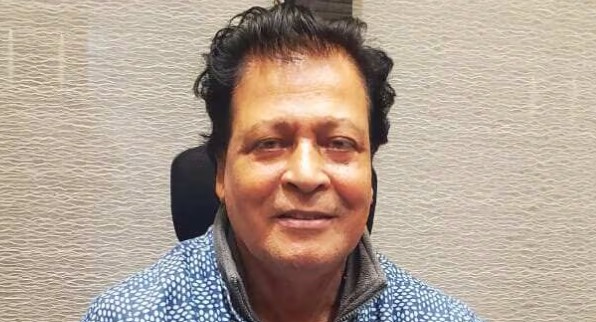
Biren Kumar Basak is a name that shines brightly in the world of Indian handloom weaving. Born in 1951, he rose from a life of hardship to become one of the most respected weavers in Bengal and across India. Today, he is celebrated as a Padma Shri awardee, a Guinness World Record holder, and a man who has inspired thousands of artisans with his dedication.
Basak’s life is a true example of resilience. From selling saris door-to-door in Kolkata to building a business worth crores, his story reflects the power of hard work and faith. He is not only a successful entrepreneur but also a cultural icon who has kept the traditional Jamdani and Tangail weaving alive. His saris are worn by celebrities, politicians, and even global figures, making him a symbol of Bengal’s rich handloom heritage.
Biren Kumar Basak Age, Wife, Career, Family, BIO
| Attribute | Details |
|---|---|
| Full Name | Biren Kumar Basak |
| Date of Birth | 16 May 1951 |
| Age (as of 2026) | 74 years |
| Birthplace | Tangail, East Pakistan (now Bangladesh) |
| Nationality | Indian |
| Ethnicity | Bengali |
| Education | Studied up to Class 6 at Shibnath High School, Tangail |
| Profession | Handloom Weaver, Entrepreneur |
| Known For | Jamdani and Tangail saris; weaving world’s longest sari; Padma Shri award |
| Father | Banko Bihari Basak (poet and weaver) |
| Mother | Homemaker |
| Siblings | Three brothers (including Dhiren Kumar Basak) and two sisters |
| Spouse | Bani Basak (married in 1977) |
| Children | One son – Abhinaba Basak |
| Major Awards | Padma Shri (2021), Sant Kabir Award (2013), Shanta Prasad Award (2019), Guinness World Record (2018) |
| Business | Founder of Biren Basak and Company (1987), Phulia, West Bengal |
| Net Worth | Estimated ₹50 Crore (2021) |
| Turnover | Approx. ₹50 Crores (2016–2017) |
| Residence | Phulia, Nadia district, West Bengal |
| Celebrity Clients | Satyajit Ray, Hemanta Mukhopadhyay, Mamata Banerjee, Sourav Ganguly, Amjad Ali Khan, Lata Mangeshkar, Asha Bhosle, Nita Ambani |
| Special Achievements | Guinness World Record for weaving 3726.43-meter sari; Limca & India Book of Records |
| @birenkumarbasak/ | |
| Wikipedia | @Biren_Kumar_Basak |
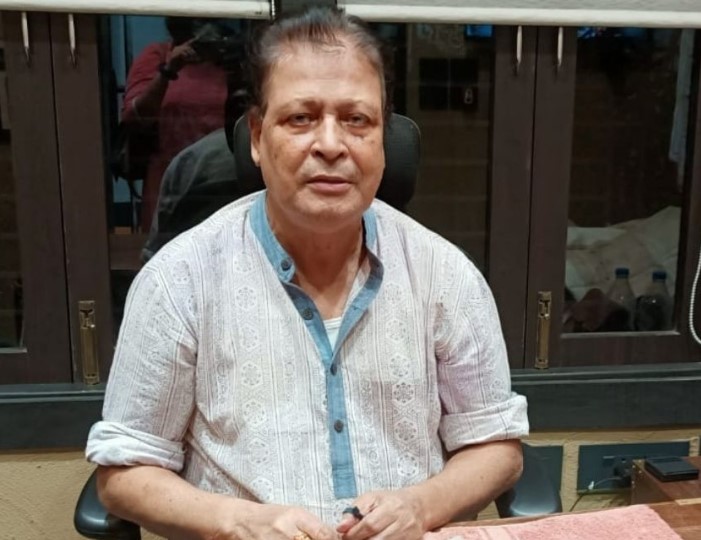
Early Life and Childhood Struggles
Biren Basak was born on 16 May 1951 in Tangail, East Pakistan (now Bangladesh). His childhood was marked by challenges. In 1962, his family had to migrate to West Bengal due to riots and unrest. They arrived in India with almost nothing, carrying only memories of their homeland and the skills of weaving that ran in their family.
Life in West Bengal was not easy. The family struggled to survive, and young Biren had to step in to support them. At the age of 13, he began working in a local weaving factory, earning just Rs. 2.50 per day. This small income helped his family put food on the table.
Family Background and Roots
Biren Kumar was born into a family deeply connected with weaving and poetry. His father, Banko Bihari Basak, was both a poet and a weaver. His mother was a homemaker who managed the household despite financial struggles. Biren grew up with three brothers, including Dhiren Kumar Basak, and two sisters. Together, the family shared a bond of love, resilience, and cultural heritage.
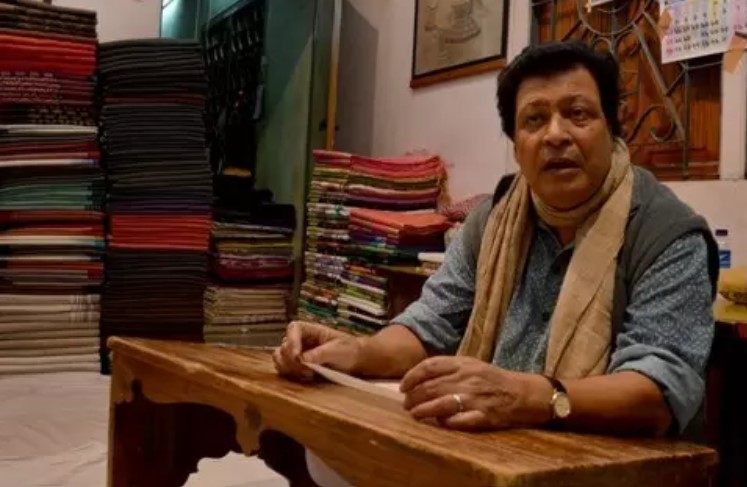
The Basak family’s weaving tradition played a big role in shaping Biren’s future. His father’s skills and poetic nature inspired him to see weaving as more than just a livelihood. It became a way to express creativity and preserve culture. This strong family background gave Biren the courage to face hardships and build a legacy that continues to inspire weavers across India.
Education and Spiritual Inclinations
Basak studied at Shibnath High School in Tangail until class 6. His formal education was cut short due to financial problems and migration. But his learning did not stop there. He found inspiration in hymns, devotional songs, and spiritual teachings.
Even as a child, Biren showed interest in weaving and creativity. He believed that weaving was not just a profession but a form of art. His spiritual outlook helped him see weaving as a way to connect with culture and tradition. This mindset later influenced his designs, many of which carried themes from the Ramayan, Lord Ganesha, and other devotional stories.
Marriage and Personal Life
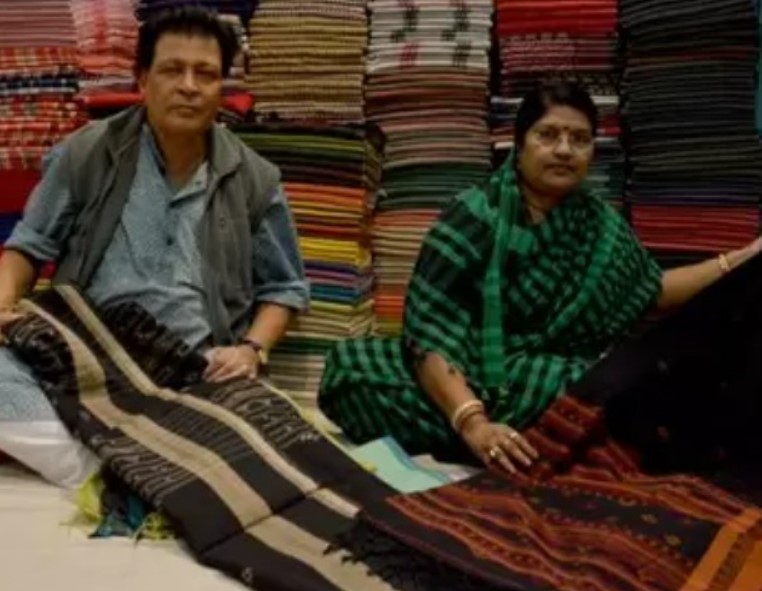
In 1977, Biren Kumar Basak married Bani Basak, who became his lifelong partner and supporter. Their marriage was built on trust and simplicity, reflecting the values of a traditional Bengali household. Together, they created a family that carried forward both cultural and entrepreneurial values.
The couple has one son, Abhinaba, who later started his own thread business. Biren believed strongly in teaching his son the importance of hard work before handing him responsibilities. He wanted Abhinaba to understand the value of money and effort, rather than simply inheriting success. This philosophy shows Biren’s deep sense of discipline and his desire to pass on life lessons to the next generation.
See Also:- Cindy Bernadette
Journey into Weaving
Weaving was not just a profession for Biren; it was part of his identity. He began weaving at the age of 8, learning the craft from his family and community. By 13, he was already working in a factory, earning a small daily wage. These early years were tough, but they gave him practical skills and a strong work ethic.
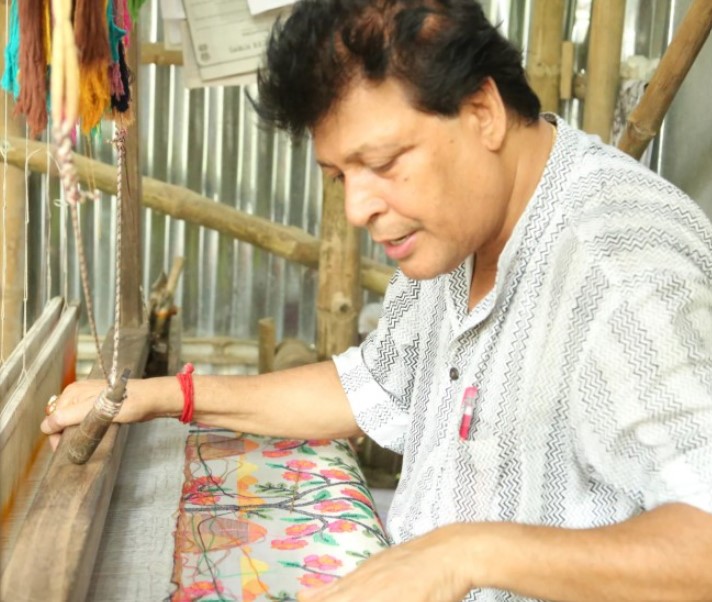
His weaving style was influenced by the traditions of Tangail and Jamdani saris. Biren’s creativity allowed him to bring new life to these traditional patterns. He often said that weaving was like telling a story through threads, and his saris reflected themes from mythology, spirituality, and everyday life.
Entrepreneurial Beginnings
Biren’s entrepreneurial journey started in 1970 when he borrowed Rs. 10,000 to begin his own venture. With this small loan, he and his brother began selling saris door-to-door in Kolkata. They carried bundles of saris and walked from house to house, convincing customers with their sincerity and craftsmanship.
At first, the profits were modest. Saris were sold for Rs. 15–35 each, and the earnings were just enough to survive. But Biren never lost hope. His dedication and honesty slowly built trust among customers. By 1981, he had saved enough to open a shop worth Rs. 5 lakh, a huge milestone for someone who had once earned only Rs. 2.50 a day.
Rise to Fame: From Phulia to National Recognition
In 1987, Biren established Biren Basak and Company in Phulia, a town in Nadia district of West Bengal. His company grew rapidly, employing nearly 800 weavers who worked under his guidance.
Biren’s designs stood out because they combined tradition with innovation. He created Jamdani and Dakai saris that carried scenes from the Ramayan, devotional images of Lord Ganesha, and cultural motifs that connected with people’s emotions. His saris were not just garments; they were works of art.
Awards and Achievements
Biren Basak’s journey from a small weaver in Phulia to a national icon is marked by many awards. In 2013, he received the Sant Kabir Award, which is given to master artisans who preserve traditional crafts.
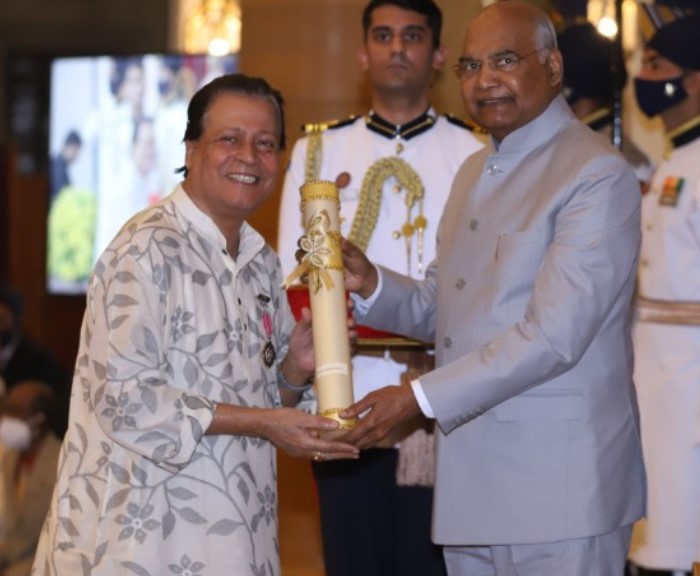
In 2018, he entered the Guinness World Records for weaving the world’s longest sari, measuring 3726.43 meters. He also found his name in the Limca Book of Records and the India Book of Records. In 2019, he received the Shanta Prasad Award, further cementing his place in India’s cultural history. His biggest honor came in 2021, when he was awarded the Padma Shri, India’s fourth-highest civilian award.
Celebrity and Political Clientele
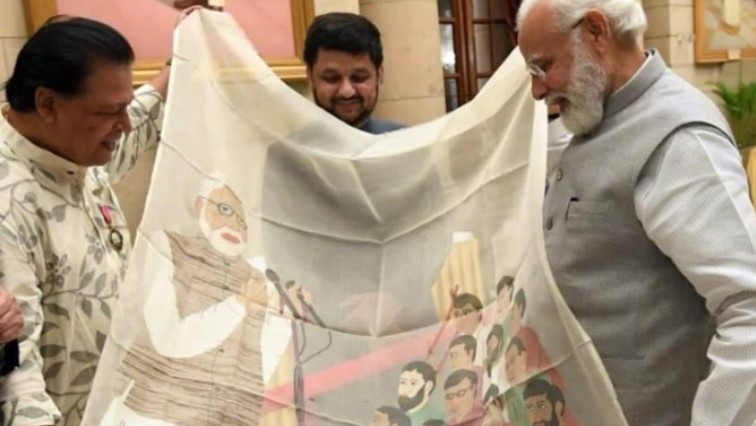
Biren’s saris are not only popular among common buyers but also among celebrities and political leaders. His creations have been worn by Satyajit Ray, Hemanta Mukhopadhyay, Mamata Banerjee, Sourav Ganguly, Amjad Ali Khan, Lata Mangeshkar, and Asha Bhosle. Each of these personalities admired the artistry and cultural depth of his work.
In recent years, his Jamdani sari gained global attention when Nita Ambani wore it at the TIME 100 Summit in 2026. This moment highlighted how a sari woven in a small town of Bengal could reach international platforms. His clientele shows that his work is not limited to local markets but has a universal appeal.
Read Also:- Jang Won-young